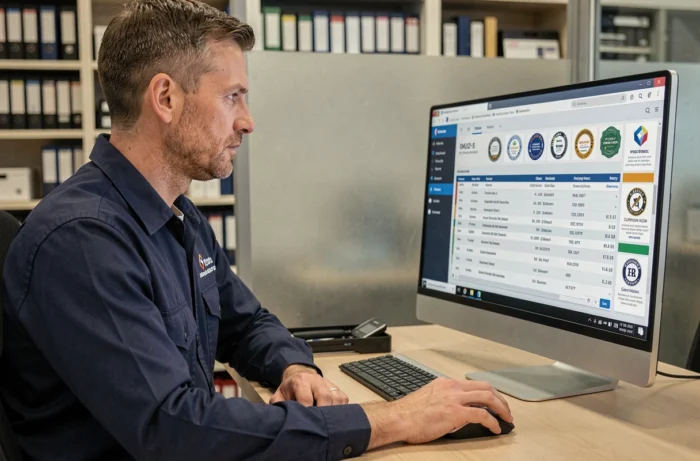
When a technical control center receives about ten vehicles per day, every minute spent searching for a regulatory document or following up with a client for a re-inspection is a minute lost on the inspection line. The Securitest affiliate space addresses this specific problem: centralizing administrative, technical, and relational management on a single secure portal, accessible to professionals in the Securitest network.
Manufacturer recalls and technical control: what the 2026 reform changes
Since January 1, 2026, technical control centers must check if a vehicle is subject to a serious manufacturer recall of the “stop drive” type. The most well-known case concerns Takata airbags, whose defect can cause metal shards to be projected during deployment.
Specifically, a vehicle affected by this type of recall and not repaired is classified as critical failure with a validity limited to 24 hours. The owner must have the repair done before resuming normal driving.
For affiliated professionals, this reform changes several aspects of daily operations. The online portal must allow for quick identification of vehicles under recall, block slots for associated re-inspections, and send clear communication to the client. A management tool that does not incorporate this regulatory dimension becomes a hindrance rather than a help. It is precisely on this type of evolution that the Securitest affiliate space takes its role as a centralized dashboard.
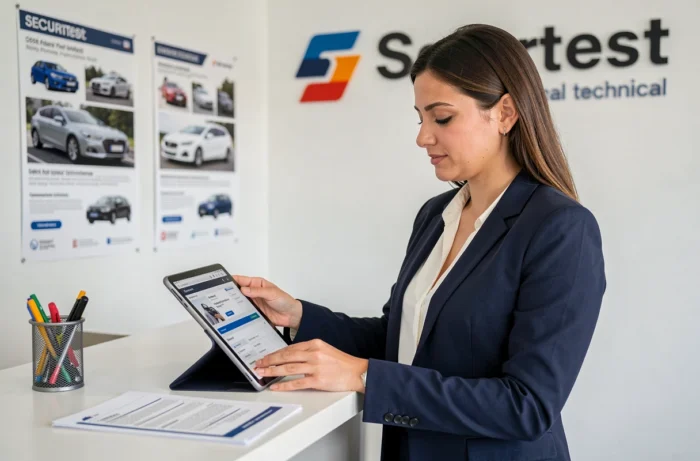
Vehicle data management and traceability on the Securitest portal
Have you ever noticed how much data circulates during a single technical inspection? Registration, mileage, checked control points, overall result, date of the next deadline. Multiply that by several hundred visits per month, and the issue of traceability becomes central.
The affiliate space structures this information in a history that can be consulted by vehicle. Each record groups past visits, identified failures, and completed re-inspections. This tracking allows the inspector to identify a recurring vehicle or a technical point that comes up from one visit to another.
Data compliance and legal obligations
Technical control centers handle personal data related to vehicle owners: name, address, contact details, automotive history. The portal must ensure storage complies with the data protection requirements in force in France.
Enhanced authentication, implemented to access the space, plays a direct role in this compliance. Each affiliate logs in with personal credentials, limiting access to only authorized individuals within the center.
Administrative follow-up and management of a technical control center
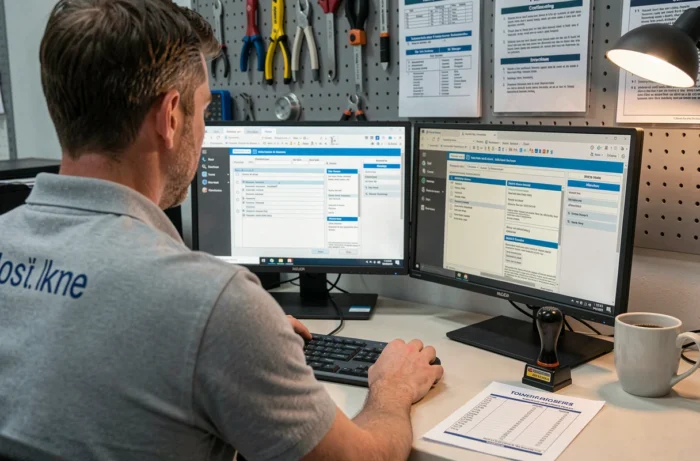
A Securitest affiliate center is not just an inspection line and an inspector. The administrative part (billing, appointment tracking, client follow-ups) represents a significant workload, especially for structures that operate with a small team.
The portal combines several functions that lighten this load:
- Management of the appointment schedule, with the ability to block specific slots for re-inspections or additional checks related to manufacturer recalls.
- Tracking of billing and documents associated with each visit, directly accessible from the vehicle record.
- Access to regulatory documents updated by the network, which avoids manually searching for the latest applicable decrees or circulars.
An affiliate that centralizes scheduling, billing, and regulations on a single tool reduces data entry errors and follow-up oversights. The time savings are especially noticeable on repetitive tasks: drafting reports, sending reminders before deadlines, archiving results.
Control of category L vehicles: an extension to anticipate
Regulatory news is not limited to passenger cars. The gradual integration of technical control of category L vehicles (motorcycles, scooters, quadricycles) into the scope of centers represents a structural change for the profession.
For an affiliate center, this extension involves new control points, suitable equipment, and an update of inspectors’ skills. The online portal must support this transition by integrating specific control grids for these categories, distinct from those for light vehicles.
Integrated training and regulatory monitoring
Why does this topic directly concern the affiliate space? Because a network like Securitest disseminates training updates and new procedures through its portal. An inspector accessing their space finds continuing education modules, alerts on normative changes, and technical guides specific to the network.
Centralized regulatory monitoring prevents centers from individually monitoring the Official Journal. The network filters, synthesizes, and makes relevant information available directly in the interface.
Service quality and customer relationship in a technical control network
Technical control remains an obligation perceived as burdensome by most motorists. The quality of reception and the smoothness of the customer journey make the difference between a center where one returns and a center that one endures.
The affiliate space contributes to this quality of service in an indirect but measurable way. A center with a well-maintained agenda offers realistic slots, limits waiting times, and sends reminders before the inspection deadline. A client reminded at the right time is a client who does not find themselves in violation.
The portal also helps maintain brand consistency across the Securitest network in France. The documents provided to clients, reports, and communications follow a unified format, enhancing readability for motorists visiting different centers in the network.
The Securitest affiliate space is not a digital gadget added afterward. It is the tool through which regulatory compliance, administrative management, and customer relations of a technical control center are processed. With the arrival of new obligations regarding manufacturer recalls and the expansion to category L vehicles, its role in the daily lives of affiliates will only continue to grow.