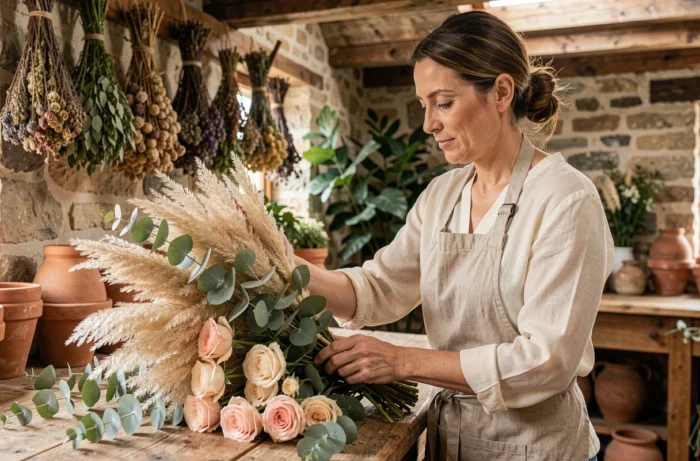
Floral decoration and floral craftsmanship encompass technical realities that online displays rarely show. Dried flowers, stabilized flowers, indoor plant compositions: the manufacturing processes, lifespan, and maintenance constraints vary to the point of altering the decorative result obtained. Comparing these parameters allows for choosing a solution suited to each room in the house.
Dried or stabilized flowers: what the process changes for your decoration
The term “everlasting flowers” circulates in most online shops, but it masks a crucial difference in manufacturing. Drying involves dehydrating the plant, making it rigid and brittle. Stabilization, on the other hand, replaces the sap with a preservative solution based on glycerin and colorants, which preserves the flexibility and volume of the plant.
The consequences for interior decoration are direct. A dried bouquet gradually loses its colors and may begin to fade after about two years. A stabilized composition retains its appearance for several years, provided it is protected from humidity, UV rays, and temperature fluctuations.
| Criterion | Dried flowers | Stabilized flowers |
|---|---|---|
| Process | Natural or accelerated dehydration | Replacement of sap with glycerin and colorants |
| Texture | Rigid, brittle | Flexible, close to fresh |
| Estimated lifespan | About two years before visible fading | Several years in suitable conditions |
| Main sensitivity | Dust, handling | Humidity, UV, heat |
| Maintenance | Gentle dusting with a cold hairdryer | No watering, avoid contact with water |
This table summarizes the technical differences. However, it says nothing about the effect in a specific room, which also depends on ambient light and existing furniture. At Maison Floran, the artisanal creations incorporate these two families of plants to offer compositions suited to different interior contexts.
Placement constraints: where to place a floral composition in the house
The idea of a “zero-maintenance” plant decoration deserves to be nuanced. Stabilized flowers cannot tolerate high ambient humidity, which excludes the bathroom and the immediate vicinity of a kitchen sink. Dried flowers, fragile to the touch, do not fare well in high-traffic areas where they risk being bumped.
Suitable rooms and rooms to avoid
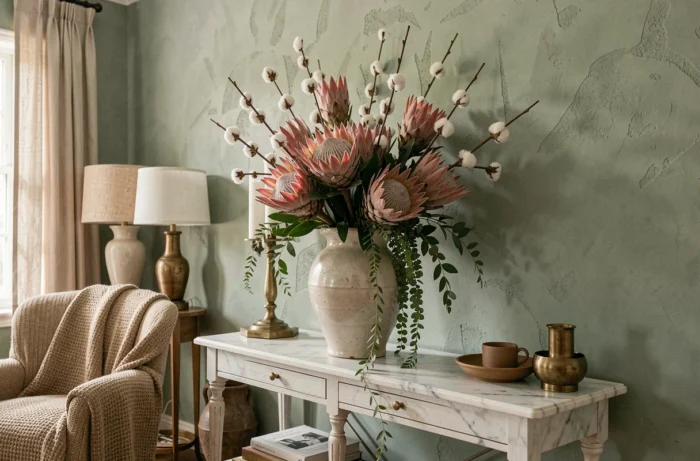
- The living room and bedroom offer the best conditions: indirect brightness, dry air, and little handling. A stabilized bouquet placed on a console or high shelf retains its appearance for a long time.
- A home office or workspace also benefits from these compositions. The biophilic approach, which involves introducing a plant presence into professional spaces, is indeed developing with stabilized installations that require neither watering nor repotting.
- The kitchen, bathroom, and south-facing window sills are the least favorable locations. Humidity accelerates the degradation of glycerin, and direct UV rays fade pigments within a few months.
Before ordering a composition, measuring the brightness and humidity level of the intended location helps avoid disappointments. A dark corner is better suited than a south-facing bay window.
Seasonality of flowers and quality of artisanal compositions
Seasonality plays a often underestimated role in the quality of a floral creation, even if dried or stabilized. Flowers harvested in season offer fresher and denser raw material, which enhances the final result after treatment.
Floral artisans who work in short supply chains select their plants at the right time of flowering. A garden rose picked in June does not yield the same stabilized volume as an out-of-season imported rose. This logic also applies to grasses, thistles, and immortelles that make up autumn dried bouquets.
Colors and ambiance according to the season
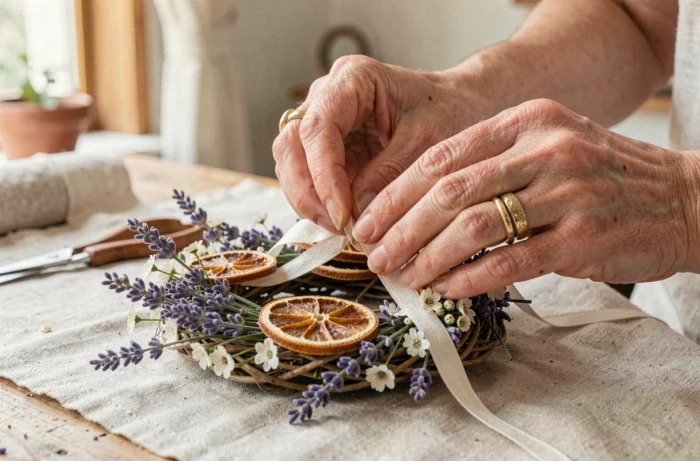
Floral craftsmanship allows for modulating the ambiance of a room without replacing everything. An autumn composition in ochre and terracotta tones warms a neutral interior. For the Christmas season, elements like red berries, stabilized fir branches, or candles associated with a plant wreath create a denser atmosphere.
The choice of colors is not just aesthetic. Light colors (off-white, powder pink) reflect more light in dark rooms. Saturated tones (burgundy, deep blue) absorb light and are suitable for already well-lit spaces. Adapting the palette to the light volume of the room produces a more coherent result than a choice based solely on personal taste.
Floral craftsmanship and sustainable decoration: the limits to know
Stabilization does not make a flower eternal. The commercial term “everlasting flower” refers to a product whose lifespan far exceeds that of a fresh bouquet, but every composition eventually degrades over time. Glycerin gradually evaporates, colorants fade, and petals lose their initial flexibility.
Stabilized products contain chemical substances (glycerin, food or industrial colorants depending on the manufacturers). Their environmental impact remains poorly documented compared to locally grown fresh flowers. For buyers sensitive to this dimension, favoring an artisan who is transparent about their suppliers and processes is a relevant selection criterion.
Artisanal floral decoration for interiors benefits from being approached as a technical choice as much as an aesthetic one. The preservation process, placement in the home, and seasonality of the raw material determine the longevity and appearance of a composition far more than its purchase price.