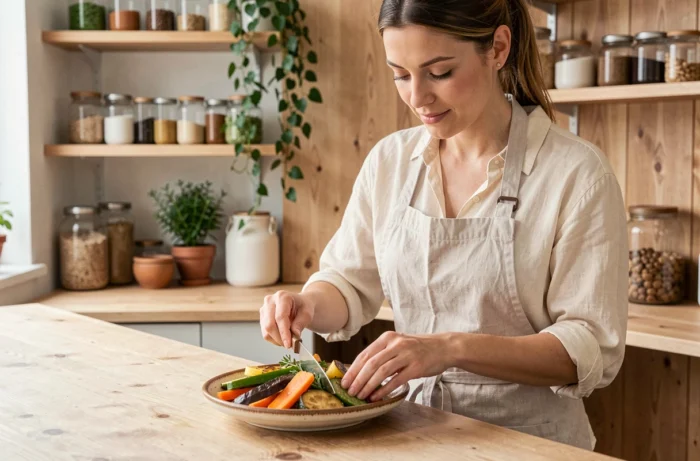
We’ve all experienced that moment: coming home from work, opening the fridge, finding vegetables bought three days earlier, and wondering what to do with them without falling back on the same bland stir-fry. Cooking vegetarian on a daily basis rarely stumbles on motivation. The problem is more concrete: finding recipes that are filling, that don’t require twenty hard-to-find ingredients, and that also appeal to those who eat meat the rest of the week.
Legumes and plain frozen vegetables: the foundation of a pantry vegetarian cuisine
Most articles on vegetarian cooking highlight substitute products like veggie steaks or burgers. In practice, feedback varies on this point, and the recent trend leans more towards raw formats: lentils, chickpeas, dried beans, tofu, tempeh. These ingredients are inexpensive, have a long shelf life, and serve as a protein base without resorting to ultra-processed products.
Plain frozen vegetables (spinach, broccoli, peas, leeks) also deserve their place in this basic pantry. They are picked and frozen at maturity, which preserves a good portion of their nutritional qualities. It mainly saves time: no peeling, no waste, no last-minute grocery runs.
A quick vegetarian dinner can be built with three components: a legume (red lentils, canned chickpeas), a vegetable (frozen or fresh seasonal), a starch or grain (rice, pasta, potatoes). The rest is seasoning. By adopting this approach, you can cook vegetarian with Myn Idee on Mon Assiette by relying on concrete combinations tailored to what you already have at home.
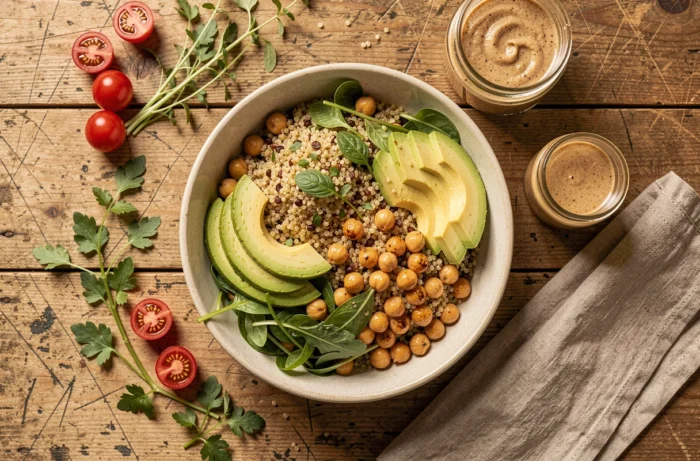
Winter vegetarian recipes: soup, gratin, and hearty dishes
Winter is the season when vegetarian cooking is the hardest to convince. We want something warm, filling, something that satisfies. Composed salads are not enough when it’s five degrees outside.
Thick root vegetable soup
Cabbage, leeks, potatoes, a knob of butter or a drizzle of olive oil: thick soup replaces a main dish when properly dosed with starches. Adding red lentils directly into the cooking transforms a classic soup into a complete meal without any extra effort.
Seasonal vegetable gratin with béchamel sauce
The gratin works because it provides comfort. Spinach or cauliflower covered in a cheesy baked béchamel, we don’t question whether it’s vegetarian or not. It’s simply good.
For the sauce, a homemade béchamel takes less than ten minutes: butter, flour, milk, nutmeg. You can add crumbled feta or chopped nuts to vary the textures. A well-seasoned gratin makes you forget the absence of meat without resorting to an industrial substitute.
Chickpea and vegetable curry
Curry is probably the most universal vegetarian dish. Canned chickpeas, crushed tomatoes, fresh or frozen spinach, coconut milk, spices. Everything cooks in one pot in less than thirty minutes. Served over rice, it’s a complete meal that pleases both flexitarians and committed vegetarians.
Planning vegetarian meals for the week without spending hours
Cooking vegetarian daily doesn’t require reinventing the wheel every night. The key is to have a base of five or six recipes that you master and rotate. You then refresh it with small touches: a new seasoning, a different seasonal vegetable, a sauce you haven’t tried.
Here’s a practical weekly rotation base:
- Monday: thick winter vegetable soup with lentils (prepared in large quantities for two meals)
- Wednesday: seasonal vegetable gratin, homemade béchamel, green salad on the side
- Friday: chickpea curry with rice, prepared in thirty minutes
- Weekend: a more elaborate dish (leek and feta tart, mushroom risotto, pasta with spinach and nuts)
On the remaining days, use leftovers or improvise with what you have. Three planned vegetarian meals per week are enough to sustainably change your habits without putting pressure on yourself.

Flexitarianism and vegetarian cooking: what the trend changes in the kitchen
Meat consumption per capita in France remains high, around 85 kg equivalent carcass per year according to FranceAgriMer. The agricultural press speaks of a “French paradox”: sensitivity to animal welfare and the environment is increasing, but volumes are not significantly decreasing.
This paradox explains why vegetarian cooking is gaining ground not among strict vegetarians, but among flexitarians. The latter do not seek to eliminate meat. They simply want to eat vegetarian two to three times a week without it feeling like a punishment.
On the regulatory side, the terms “vegan” and “vegetarian” on packaging are now more regulated at the European level. They remain voluntary but must meet specific criteria. For consumers, this means better clarity when choosing products on the shelves.
Demand is also shifting towards less processed products. Ultra-processed meat substitutes are losing ground in favor of raw formats: bulk legumes, artisanal tofu, “blends” combining plant and animal. The most sustainable vegetarian cooking starts from simple ingredients, not industrial products labeled “veggie”.
Myn Idee fits into this logic by offering vegetarian recipes built around accessible ingredients. The goal is not to convert anyone but to make meatless cooking tasty and practical enough that people return to it naturally, week after week.