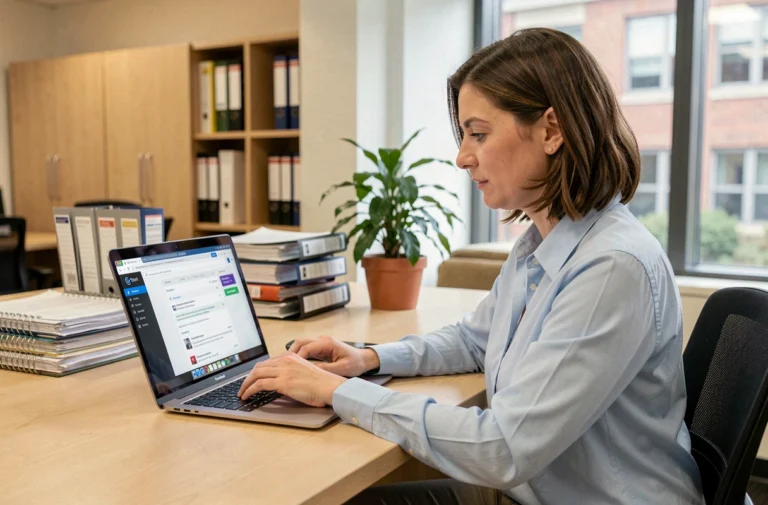
When you sit for eight hours in front of a screen and end the day with concrete trapezius muscles, it’s beneficial to understand what is happening in the body and mind when combining yoga and meditation, and especially how to adapt the practice to your reality.
Digital yoga or in-person classes: what recent research distinguishes
Yoga formats do not produce the same effects depending on the practice context. A study published in the Journal of Medical Internet Research compared yoga practiced via a digital app to an active reference intervention. The conclusion is clear: the digital format does not always replace structured support, especially for managing chronic stress.
This does not disqualify the apps. For someone who is just starting out or who has no access to classes nearby, a guided session on screen remains a valid entry point. However, if one is looking for in-depth work on posture or breathing, a teacher who corrects in real-time makes a measurable difference in progress.
To explore different approaches to yoga and find a suitable framework, one can consult https://lesjardinsduyoga.fr/ which offers various formats based on individual levels and goals.
Short meditation at work: measurable effects on alertness
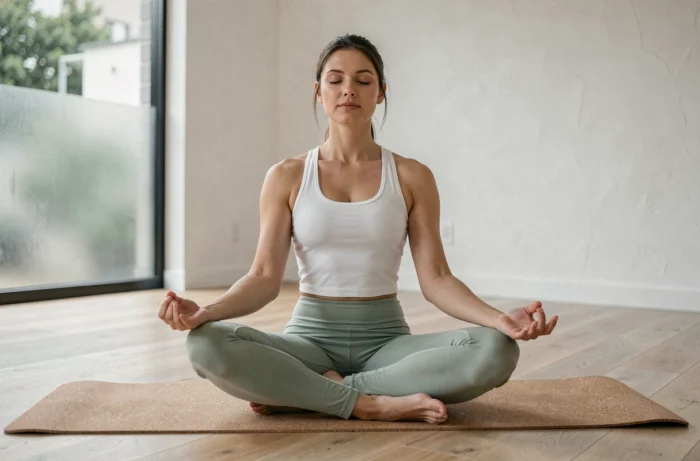
Meditation is often associated with silent retreats or 45-minute sessions. Recent scientific literature tells a different story. A few minutes of targeted practice are enough to modify alertness and perceived fatigue. Studies published in 2025-2026 show that micro-sessions of conscious movement combined with meditative attention produce effects on concentration, even in an office environment.
Specifically, we’re talking about a five to ten-minute break between two meetings. No need for a mat or specific attire. Close your eyes, synchronize your breath with a slow rhythm (long inhale, even longer exhale), and bring your attention back to bodily sensations whenever the mind wanders.
The media outlet Le Média Positif reported a study indicating that meditating for ten minutes a day reduces stress felt at work. The effect is not spectacular in the first week, but regularity leads to a gradual decrease in emotional reactivity to professional tensions.
Adapting yoga intensity according to life phase
Certain types of yoga can be counterproductive at the wrong time. A naturopathic protocol for supporting burnout, documented on the Vita Naturalis website, distinguishes several recovery phases. In the acute phase, gentle postures and slow breathing work are recommended. In the recovery phase, more sustained practices and contemplative exercises are gradually introduced.
In other words, doing dynamic vinyasa sequences when in total exhaustion worsens the situation instead of alleviating it. The body needs restoration, not additional strain.
The criteria for choosing your type of practice according to the moment:
- Chronic fatigue or ongoing burnout: prioritize restorative yoga (postures held for a long time with supports, slow abdominal breathing) and short guided meditation
- Moderate stress with good physical energy: classic hatha yoga combined with a ten to fifteen-minute mindfulness meditation works well to rebalance the nervous system
- Recovery phase after a difficult period: gradually increase intensity, introduce standing postures and more engaging pranayama exercises
Breathing and posture: the common foundation between yoga and meditation
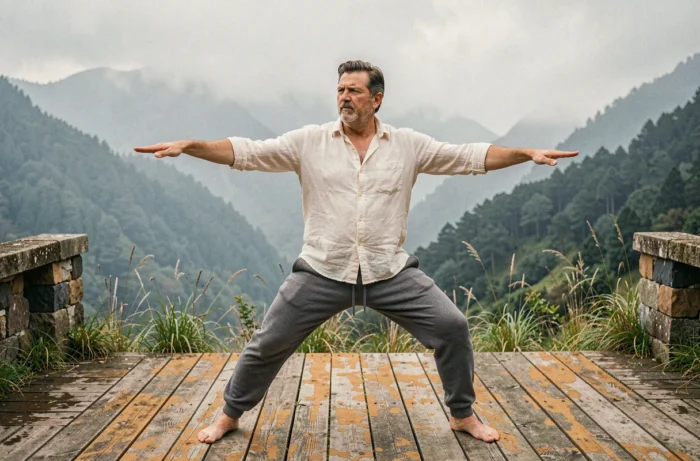
The link between yoga and meditation does not go through philosophy. It goes through breath. When holding a yoga posture (a warrior II, for example), you learn to breathe through discomfort. This skill transfers directly to seated meditation: staying present despite mental agitation relies on the same respiratory mechanism.
Pranayama (breathing techniques) serves as the bridge between the two disciplines. A simple and documented technique: alternate nostril breathing. Close the right nostril, inhale through the left. Close the left, exhale through the right. Then reverse. Five cycles are enough to reduce heart rate and prepare the mind for a meditative state.
From a postural perspective, prolonged meditation requires a back that can hold itself without excessive tension. This is precisely what yoga develops:
- Seated postures (sukhasana, vajrasana) strengthen the deep trunk muscles and train the pelvis to tilt correctly
- Gentle forward bends loosen the hamstrings, freeing the lumbar area during seated meditation
- Spinal twists improve thoracic mobility and facilitate deep breathing, a necessary condition for comfortable meditation
Cortisol and sleep: the Heartfulness approach
Among the meditative approaches recently studied, Heartfulness meditation has been the subject of several randomized clinical trials reported by the AJN1 portal in 2025. The results show a documented decrease in cortisol and an improvement in sleep quality among regular practitioners.
Cortisol, the stress hormone, follows a circadian cycle: high in the morning, low in the evening. In chronically stressed individuals, this cycle becomes disrupted. Regular meditation (regardless of the method) helps restore this natural curve, with direct effects on falling asleep and sleep depth.
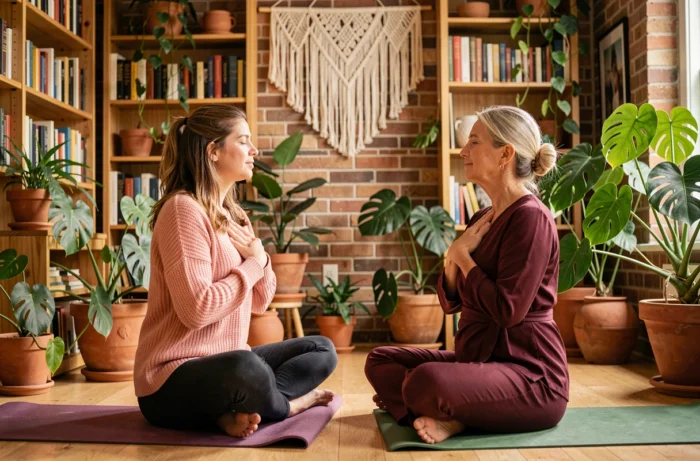
One does not need to adhere to a particular school to benefit. Regularity matters more than the chosen technique. Ten minutes each evening before sleeping, focusing on the heart area and letting thoughts pass without clinging to them, constitutes an accessible protocol for everyone.
Yoga and meditation remain tools that require a minimum of consistency and adaptation to each individual’s context. Adjusting the format, intensity, and duration to the current situation conditions the totality of the benefits one can derive from them.