Choosing wedding decor is primarily about deciding on the atmosphere your guests will experience throughout the day. Before the colors, before the flowers, and before any centerpieces, one question deserves your attention: what type of lighting do you want in your reception hall? This aspect, often pushed to the background, actually influences the appearance of every decorative element and the quality of the souvenir photos.
Color Temperature and Wedding Decor: The Parameter That Changes Everything
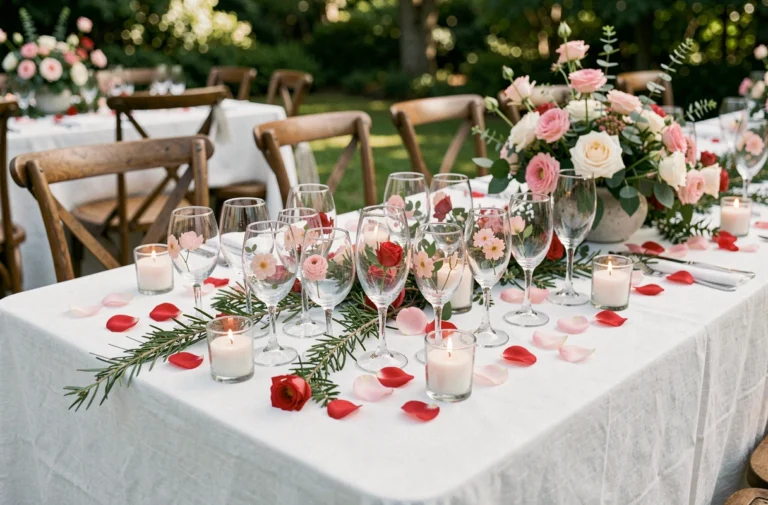
You may have noticed that the same room looks warm by candlelight and cold under neon lights? This is exactly what happens on a wedding day. Event decoration professionals recommend favoring very warm Edison bulbs, around 2,200 K, or candles for reception areas.
White LED spotlights directed straight at the tables produce an unflattering photo effect and create a versatile room ambiance. Warm light, on the other hand, enhances textures, softens skin tones, and adds depth to floral arrangements.
In practical terms, lighting should be considered as a decoration element in its own right, just like stationery or flowers. If the budget is tight, it’s better to invest in successful lighting than in an additional centerpiece. Among the decor ideas on Mariage et Décoration, you will also find suggestions that combine lighting and table scenography.
Color Palette for a Wedding: Start from the Venue, Not a Pinterest Board
The classic temptation is to choose two or three colors from a mood board and then apply them to the reception venue. The result is often disappointing because the shades clash with the existing stone, wood, or curtains.
Starting from the venue to build the palette reverses the logic and yields much more coherent results. Observe the dominant color of the room: blonde stone, dark beams, white walls. Then choose colors that harmonize with this environment.
How to Define a Coherent Palette
- Photograph the venue at the time of the reception to capture the actual light and reflections on the surfaces.
- Identify a dominant color (the one from the venue), an accent color (from your floral arrangements or stationery), and a neutral to tie everything together (linen, off-white, light gray).
- Test your fabric samples and flowers on-site before finalizing: a romantic burgundy in-store can turn brown in a dark space.
Three colors are more than enough. Multiplying shades fragments the eye and gives an impression of clutter rather than elegance.
Wedding Table Decor: What Really Works for Guests
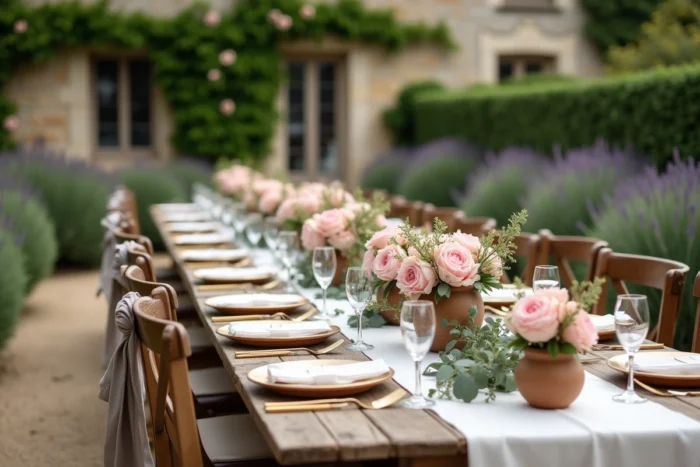
The table is where your guests spend the most time. Every decorative choice therefore has a direct impact on their comfort.
A centerpiece should never exceed the eye level of seated guests. It’s a simple rule, but it is ignored in most weddings where large floral arrangements prevent any conversation from one side to the other.
Flowers, Candles, or Objects: Choose a Main Element
Rather than stacking flowers, candles, printed menus, and small frames, focus on a single strong element. A table runner made of dried flowers, for example, can stand on its own if the rest of the tableware is understated.
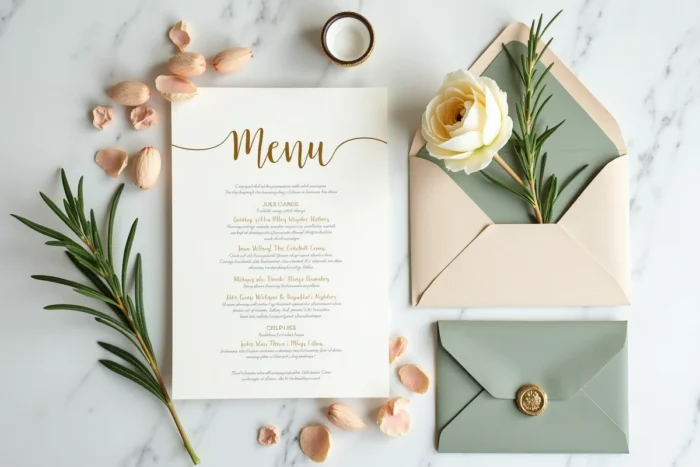
If you choose candles, prefer low and wide models that are unlikely to tip over. And if stationery is your strong suit (calligraphed menus, illustrated place cards), let it breathe by reducing the rest.
One well-executed decorative element is better than five stacked together. The gaze knows exactly where to settle, and the whole looks controlled.
Editorial Style and Photo Scenography: The Trend Redefining Decor
A recent approach transforms the way wedding decoration is conceived. Inspired by editorial photography, it involves designing certain spaces as staged scenes rather than mere accumulations of objects.
In practical terms, this results in magazine-style panels, a photo corner staged with plays of shadows and contrasts, or a guestbook reimagined as a visual installation. This approach, documented by specialized blogs like La Sœur de la Mariée in 2025, is part of the slow wedding movement.
Applying This Logic on a Tight Budget
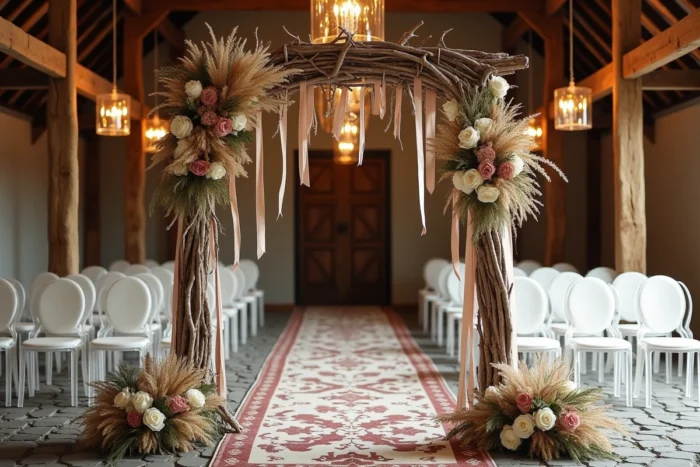
No need for an artistic director to draw inspiration from this. Choose a single spot in your reception venue (an arch, a staircase, a textured wall) and focus your decorative efforts there. The idea is to create a memorable focal point rather than sprinkling decor everywhere.
- A foliage wall with low lighting creates a spectacular effect for a moderate cost.
- A photo corner with a draped fabric backdrop and a few chosen accessories is a much better alternative to a generic photobooth.
- Grouped candles on a windowsill or console create a bright point that naturally draws the eye and photographers.
What makes wedding decor unforgettable is not the quantity of objects placed in the room. It’s the clarity of choices. A limited palette, careful lighting, and one or two well-thought-out focal points leave a much more lasting impression than a decorative accumulation, no matter how expensive. Guests remember an atmosphere, rarely a table runner.