The Vogue range is based on a color code that goes beyond a simple aesthetic choice. Each shade of the pack corresponds to a tobacco blend, an aromatic profile, and, since the price adjustments of 2026, a distinct pricing position. Understanding these differences between the colors of Vogue cigarettes requires looking beyond marketing to the actual composition of the product.
Tobacco blends of Virginia and impact on hit according to Vogue color
The lighter variants of the Vogue range favor a higher proportion of flue-cured Virginia tobaccos. This type of tobacco, air-dried, produces a smoother smoke, a milder throat hit, and a slightly sweet aftertaste. The references to darker shades incorporate different blends, with leaves treated differently, which alters the density of the smoke and the perceived intensity in the mouth.
We observe that this blending logic is not unique to Vogue, but the brand has systematized it more than others. The color code functions as a blend indicator: the lighter the shade, the more the profile tends towards smoothness. The darker or more saturated it is, the more the smoker can expect a stronger draw. To better understand the differences between the colors of Vogue cigarettes, one must look beyond the packaging.
This distinction has direct consequences on the perceived nicotine level. Since the regulatory standardization of maximum tar and nicotine levels in the European Union, manufacturers have been manipulating filter ventilation and blend composition to create sensory differences between references. Therefore, color reflects less an actual level than a perceived strength calibrated by the filter and the blend.
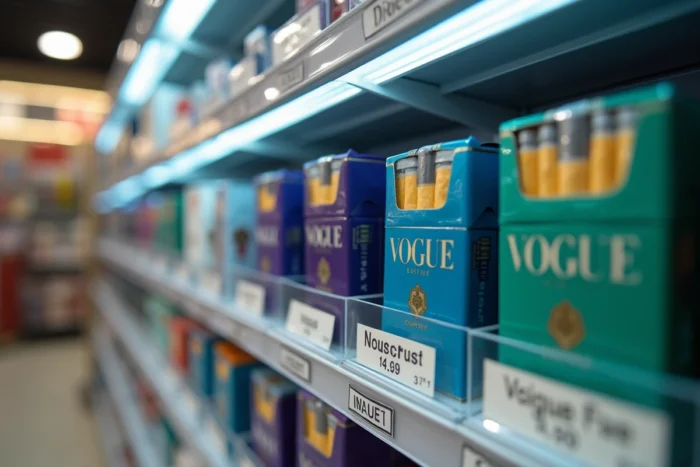
Vogue L’Essentielle, L’Optimum Gold: pricing segmentation by color in 2026
The price repositioning observed on June 1, 2026, confirms that color also serves as a commercial lever. The reference Vogue L’Essentielle blue has increased to 12.00 euros, while Vogue L’Optimum Gold is priced at 11.50 euros. The difference may seem modest, but it reflects a fine segmentation strategy.
Contrary to the general upward trend in the French tobacco market, some Vogue references experienced targeted price decreases in 2026. This counter-current movement is significant: it indicates that the manufacturer is adjusting its prices by color variant to defend market shares in specific consumer segments.
- The lighter references (type Gold) are positioned at a slightly lower price, targeting a price-sensitive audience with a smooth profile.
- The more assertive references (type blue, L’Essentielle) command a higher price, associated with a more structured product image.
- The downward adjustments on certain variants aim to counter the migration of smokers towards cheaper competing brands like JPS or discount references.
Thus, the color of the pack functions as a range marker in the economic sense, not just as a taste indicator.
Regulation on glamorous names and the future of Vogue names
The regulatory framework increasingly influences how colors and names are used by cigarette manufacturers. The European directive on tobacco products, transposed into French law, gradually prohibits names deemed too attractive. Brands like Vogue, whose name itself evokes a fashion universe, have been under scrutiny for several years.
A decree had already targeted names considered glamorous, including Vogue alongside brands like Fine, Allure, or Corset. While the name Vogue currently remains on the French market, regulatory pressure makes color all the more strategic: when the brand name can no longer convey an aspirational image, it is the color code that takes over to differentiate variants and maintain visual identity on the shelf.
This transfer of function is a phenomenon we observe across the entire premium tobacco market. The neutral packs, imposed in France, have reduced the brands’ expression surface. The color of the edge or band becomes the last lever of recognition for the consumer at the tobacconist’s counter.
Filter ventilation and sensory perception according to variants
A technical aspect often overlooked in public comparisons concerns filter ventilation. Vogue cigarettes in the lighter shades generally have a higher ventilation rate. Specifically, tiny perforations in the filter dilute the smoke with ambient air, which reduces the sensation of strength upon inhalation.
This mechanism explains why two Vogue cigarettes of different colors, with nicotine levels that are regulatory close, can produce very different sensations. Filter ventilation alters the hit without changing the declared chemical composition. A smoker switching from a gold variant to a blue variant perceives a notable change, while the difference in measured nicotine or tar remains marginal.
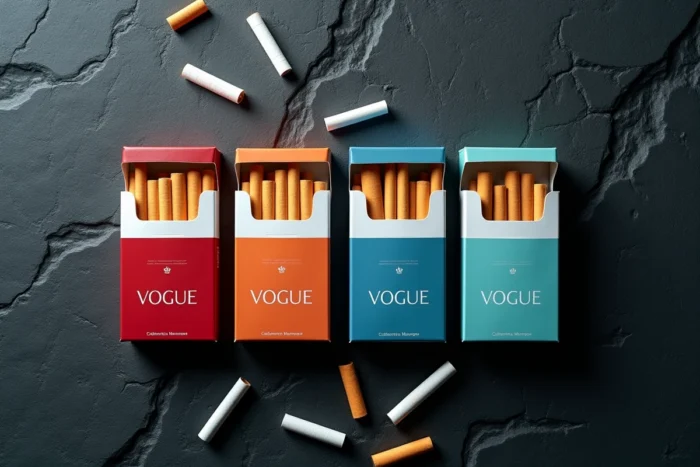
Vogue color in 2026: taste, price, or marketing, what to really choose
In 2026, the color of a Vogue pack no longer distinguishes only a taste. It simultaneously encodes a sensory profile (blend and ventilation), a pricing position (price differences between references), and a regulatory circumvention strategy (residual visual identity after the neutralization of glamorous names).
For the smoker, reading the color code thus requires a three-entry grid:
- The desired aromatic profile: Virginia smoothness or more structured draw.
- The budget: the variants do not move at the same pace during price updates.
- The availability: some niche references may disappear or change names under regulatory pressure, making color the only stable reference.
The Vogue pack you buy at the tobacconist tells a more complex story than a simple taste choice. The color has become the last allowed language in a market where almost everything else has been standardized.