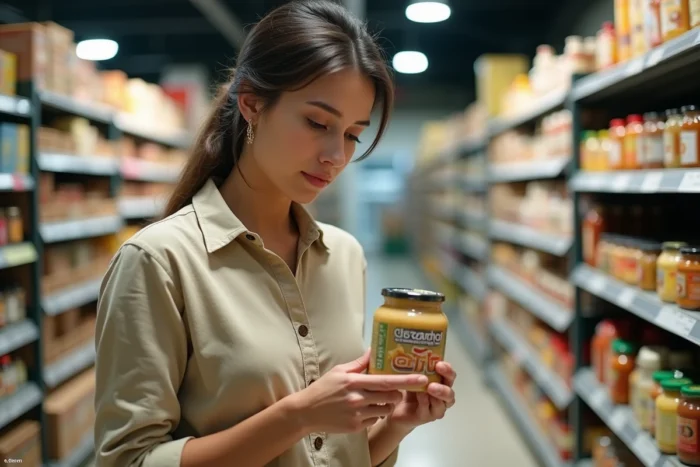
Tahini, or tahin, is a paste made from ground sesame seeds used as a base for hummus, baba ganoush, and many Levantine sauces. In French supermarkets, this product does not have a standardized location: depending on the store, the layout, and local listing policies, tahini can be found in two or even three different aisles of the same supermarket.
Why tahini changes aisle depending on the store
Tahini belongs to two categories of products that do not share the same space in the store. On one side, nut butters (almond, hazelnut, peanut), placed in the organic or dietary aisle. On the other, Eastern condiments (pomegranate molasses, rose water, chili paste), located in the world products aisle.
Each store makes different decisions. At Auchan, Al’Fez tahini is often found in the world products aisle, near Eastern specialties. At Intermarché, the Jardin Bio étic brand directs placement towards the organic aisle. Super U sells a sesame paste under its U Bio brand in a jar, logically placed with other organic nut butters.
A detailed guide explains the placement of tahini at Leclerc which aisle and in other stores, aisle by aisle, which avoids wandering through three aisles on each visit.
This dual classification has a concrete consequence: a store can list tahini without the front desk staff knowing where to locate it, simply because the product is not labeled as “condiment” or “paste” in the internal system.
Organic aisle or world products aisle: where to search first
The majority of supermarkets place tahini in the organic aisle, among nut butters. The jar is then found next to almond butter, hazelnut butter, or organic peanut butter. This placement corresponds to organic brand references (Jardin Bio étic, U Bio, Bio par Nature).
The world products aisle, sometimes called “international grocery,” constitutes the second location. At Auchan, this aisle features Eastern brands like Al’Fez or Al Wadi. Tahini is alongside canned hummus, dried chickpeas, and Middle Eastern spices.
A third location on the rise
In recent years, some stores have integrated tahini into their “Eastern cooking aids” range in the fresh deli or snacking aisle. The product then appears in small jars or pods, next to refrigerated hummus and falafels. This placement remains minority, but it is growing with the increasing popularity of ready-to-eat hummus.
Identifying the right jar of tahini in the aisle
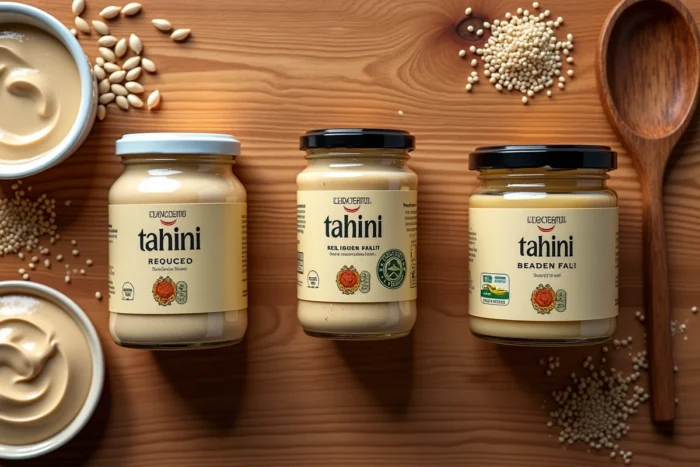
Tahini almost always comes in a transparent glass jar showing a light beige paste. This appearance allows it to be visually spotted, even when placed among unrelated products. The paste may show a separation of oil/solid on the surface, which is normal for tahini without emulsifier.
Several confusions are common in the aisle:
- Whole sesame paste (unhulled seeds): darker color, more bitter taste, often sold next to classic tahini in the organic aisle.
- Black sesame paste: a different product, made from roasted black sesame seeds, with a distinct flavor profile.
- Similar jarred peanut butter: check the label, as some packaging looks very similar.
On the label, tahini should contain only one ingredient: sesame seeds (hulled or semi-whole). Any addition of vegetable oil, sugar, or salt indicates a processed product that strays from traditional tahini.

Tahini brands available at Leclerc, Auchan, Intermarché, and Super U
The offering varies from one store to another, and sometimes from one store to another within the same chain. Here are the most common references based on available data:
| Store | Common Brand | Usual Aisle |
|---|---|---|
| Leclerc | Organic brands (varies by store) | Organic / World products |
| Auchan | Al’Fez, Bio par Nature | World products / Organic |
| Intermarché | Jardin Bio étic | Organic |
| Super U | U Bio (jar) | Organic / Nut butters |
The premiumization observed since 2024-2025 at Auchan, with the appearance of “Bio par Nature” references and authentic Eastern brands, shows that stores are expanding their offerings beyond just private label brands. This movement benefits consumers who want to compare quality, sesame origin, and price without going through a specialty grocery store.
Health recalls and quality control of sesame in supermarkets
Several recent health recalls have involved chemically contaminated sesame seeds sold at Auchan, Carrefour, Intermarché, Leclerc, and Coopérative U. These recalls have led some stores to strengthen their controls on sesame-based products and temporarily modify their offerings.
For consumers, this means that a product usually available may disappear from the aisle for a few weeks. Checking the government site Rappel Conso before a purchase allows you to verify that no ongoing batches for sale are affected.
- Check the batch number on the jar before purchase if a recall is ongoing.
- Prefer brands that display traceability of the sesame origin on the label.
- In case of doubt, the drive or online order of the store often displays updated product sheets more quickly than the physical aisle.
Tahini remains an accessible product in most French supermarkets. The difficulty does not lie in its rarity, but in its classification which varies from one store to another. Start with the organic aisle, then check the world products aisle, covers the vast majority of cases. The fresh deli aisle also deserves a look if the first two locations yield no results.